Traditional medicine practices for Cutaneous Leishmaniasis in Kalu District, South Wollo, Ethiopia | Tropical Medicine and Health

Participants’ socio-demographic characteristics
A total of 18 individuals participated in the study, comprising 10 cutaneous leishmaniasis affected individuals, 5 traditional healers, and 3 local opinion leaders. The majority of participants were male (n = 11, 61%), with 14 (78%) of individuals aged between 20 and 49 years old. Educational status varied, ranging from no formal education to completion of secondary school, with a small number having attended tertiary education. Most participants were farmers (Table 1).
Treatment decisions for cutaneous leishmaniasis
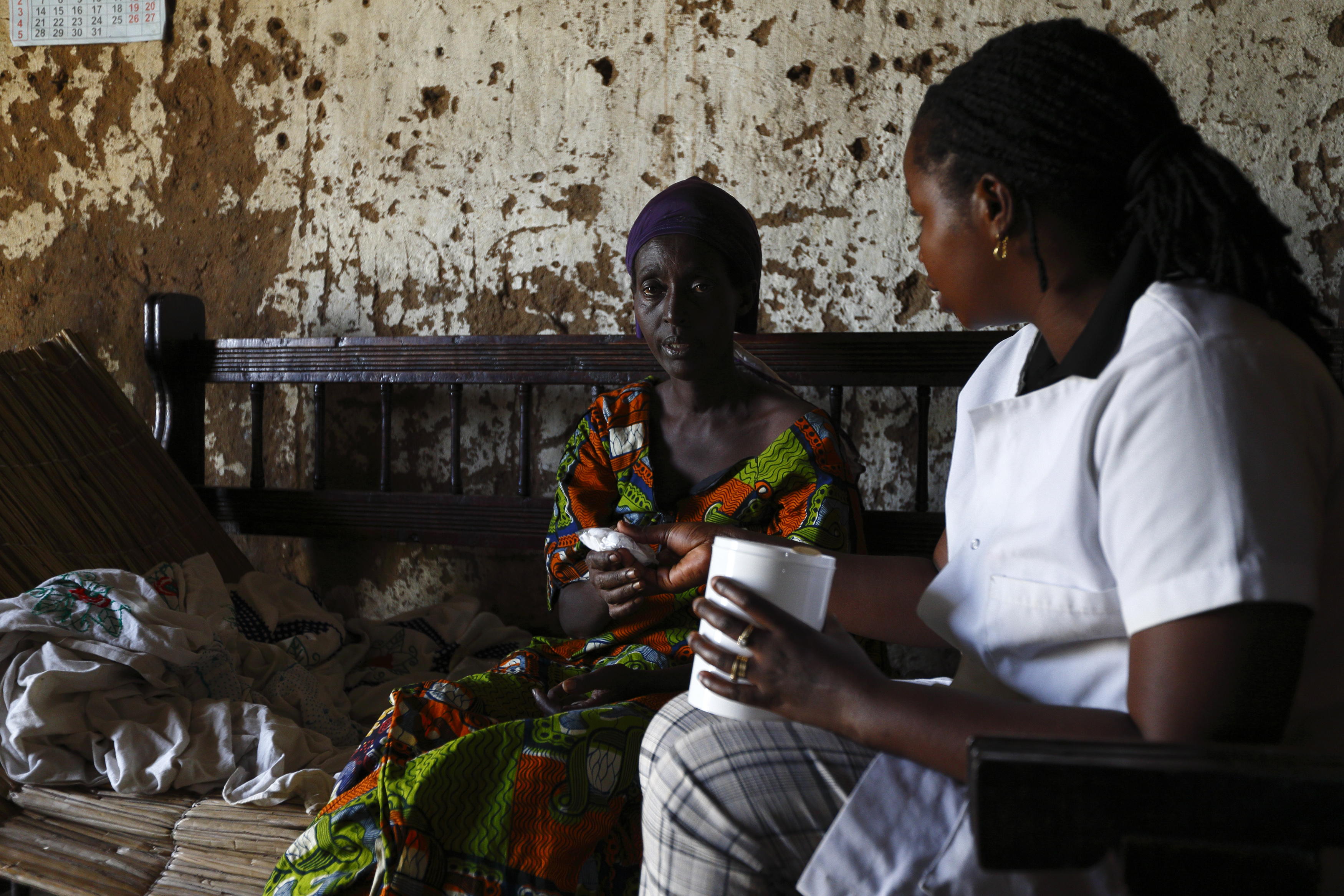
Interviews with cutaneous leishmaniasis affected people and healers revealed that individuals affected by cutaneous leishmaniasis follow patterns of care that typically progress from pursuing home-based treatment to visiting traditional healers, with only a few seeking allopathic healthcare. At the household level, cutaneous leishmaniasis is recognized based on its symptoms, and home-based remedies are sometimes used.
The lesion was on my nose. It was not painful, but it itched and gradually got bigger. I decided to try a home remedy and applied honey every morning (23-year-old male affected by cutaneous leishmaniasis).
A health professional affected by cutaneous leishmaniasis visited Boru Meda General Hospital for management of the disease. However, he reverted to home remedy because there was no treatment available at Boru Meda General Hospital at that time.
I went to Boru [Meda General] Hospital, but they had no treatment but confirmed that it was ‘Kunchir’ [cutaneous leishmaniasis]. Then I came home and applied the Tazma honey. Now, I don’t have any scars or marks (32-year-old male affected by cutaneous leishmaniasis).
If the problem persists, cutaneous leishmaniasis affected individuals visit traditional healers who may use herbal or spiritual treatments. Cutaneous leishmaniasis affected individuals sought traditional treatments based on recommendations from their family members, neighbors, and community members. One participant reported,
A person who had been healed… said ‘I did not see what kind of leaf the medicine was, but I am healed, so go there [to a traditional healer]…’. Then I went; that traditional treatment healed me (40-year-old female affected by cutaneous leishmaniasis).
And another.
…I found out about a traditional healer…. and he gave me the medicine that cured me. (70-year-old female affected by cutaneous leishmaniasis)
An opinion leader described the lack of awareness of the availability of allopathic treatment as key to explaining people’s use of traditional medicine:
They (cutaneous leishmaniasis affected individuals) don’t know that there is modern medicine that can heal cutaneous leishmaniasis; it is a problem of awareness. (Local opinion leader)
Some individuals affected by cutaneous leishmaniasis initially opted for household remedies because the disease is common in the community and often perceived as a minor condition.
I didn’t go to the health center because I believed that medical treatment wouldn’t cure me. I also didn’t think modern medicine was available for ‘Kunchir’. In our village, we consider it [cutaneous leishmaniasis] a minor condition, so I didn’t seek treatment there [health center]. No one advised me to go, so I applied a remedy [sap of Euphorbia abyssinica] myself, and it just got better. (23-year-old male affected by cutaneous leishmaniasis)
Limited access to allopathic healthcare facilities was mentioned as a barrier, leading individuals to prefer traditional healers within their communities. Additionally, the seasonal nature of agricultural work restricts income generation to specific times of the year, limiting access to costly allopathic treatments. The prolonged duration of allopathic treatment, which may require repeated trips to the hospital or even 28 days of hospitalization, poses a financial and time challenge for affected individuals and their families.
There is a treatment in Boru [Meda General] Hospital. I have heard that it will take up to a month, and you need to be admitted to get the treatment. Also, I need money when I stay there for a whole month, so I am thinking of going next year after I save the money I need for that. (28-year-old male affected by cutaneous leishmaniasis)
On the other hand, a small amount of money ranging from 50 to 100 ETB (0.38–0.77 USD) or something in-kind, such as sugar, khat (Catha edulis), juice, and incense, are given to the traditional healers for the medication to be effective and not as payment for the treatment, which is known as Erensa. In addition, they would bring Hadiya (a gift) to the traditional healer when they are healed.
Some cutaneous leishmaniasis affected individuals argued that people’s belief and confidence that traditional healers have specialized skills for treating certain ailments, including cutaneous leishmaniasis, was why some preferred seeking care from traditional healers. This trust is built either on personal experience or on accounts from others who have successfully recovered using traditional treatments. People may spend a large amount of money travelling to a traditional healer, and sometimes they bring expensive gifts like goats and camels.
Their [traditional healers’] treatment is not preferred because it’s free, but because of the outcome. It doesn’t matter if there’s a payment or not; it’s because we see its effectiveness. We don’t think that it’s free because we are taking a lot of things with us willingly. (24-year-old female affected by cutaneous leishmaniasis)
Sociocultural influences also played a pivotal role in shaping healthcare-seeking behaviors. Certain diseases, including cutaneous leishmaniasis, were believed by some to be treatable only through traditional methods. A traditional healer explained,
They [cutaneous leishmaniasis affected individuals] choose traditional medicine because there is a community viewpoint that it [cutaneous leishmaniasis] is cured by traditional treatment. They believe that …‘kunchir’[cutaneous leishmaniasis] can be cured only by traditional medicine, and not by modern treatment. (Traditional Healer-SH)
The allopathic treatment option was often considered the last option, only when traditional options had been exhausted.
…but now we are ready to seek the modern option. We have seen that the traditional medicine has not healed us; that is all I’m saying. (25-year-old male affected by cutaneous leishmaniasis)
Sources of traditional treatment for cutaneous leishmaniasis
Traditional treatments used for cutaneous leishmaniasis include home remedies and treatments from traditional healers.
Home remedies
This level of care is based on locally shared understandings of the symptoms and experiences in self-management.
-
(a)
Honey
Honey is usually applied to the wound for its medicinal properties as a first line of treatment in their household. An account by a cutaneous leishmaniasis affected individual;
I smeared the lesion with honey, and this helped the wound not to have a foul odor…. I put the honey on the wound at night and cleaned it with soap and water in the morning. …. The wound was healed after I used the honey for some time. (32-year-old male affected by cutaneous leishmaniasis)
-
(b)
Use of dried bat meat
In Kalu, a widely held belief is that bat urine is a cause of cutaneous leishmaniasis (10). Some people believe that applying dried and powdered bat meat can be used as a remedy for cutaneous leishmaniasis.
I killed the bat and dried the meat, then crushed and applied it over the affected area, and the wound has healed (28-year-old male affected by cutaneous leishmaniasis).
-
(c)
Cactus (Euphorbia abyssinica)
The application of the sap of Euphorbia abyssinica to cutaneous leishmaniasis lesions is a common practice reported by community members. Cutaneous leishmaniasis affected individuals stated that while this substance can cause inflammation of the skin and surrounding areas, it is believed to eventually lead to healing of the lesion.
When I found out that the lesion was kunchir, I applied the latex from a plant called Qolqolo [Euphorbia abyssinica]. When you smear it on the lesion, it pulls up not only the wound but also part of the surrounding skin. It bores inside and uproots the lesion with the skin. (23-year-old male affected by cutaneous leishmaniasis)
-
(d)
Heated metal objects
The application of heated metal objects such as knives, nails, sickles, or other metallic tools to cutaneous leishmaniasis lesions is reported to assist in healing through cauterization. Individuals affected by cutaneous leishmaniasis may perform this procedure themselves or be assisted by others. The duration and frequency of the application vary among individuals, depending on how quickly their wounds heal. A traditional healer shared his personal experience of using a heated knife to cauterize his cutaneous leishmaniasis lesion, stating:
I heated a knife and applied it to the wound. I applied it myself … it made the edges pull inward and dried the wound. (Traditional Healer-ME)
Traditional healers’ settings and practice
Observations of traditional healers’ practices revealed a variety of settings and healing approaches. Three of the five traditional healers were observed (pseudonyms: ME, AJ, and TA). Consultations with six people for skin-related conditions were observed; none of these individuals were treated for cutaneous leishmaniasis.
The traditional healers predominantly utilized plant-based remedies. TA incorporated spiritual healing into the plant-based remedies he provides, while others provided plant-based remedies only.
ME’s practice setting was organized similarly to a modern clinic in Kalu. ME is licensed to practice traditional medicine. The waiting area contains a television, a couch, and a bench outside for overflow. Various traditional medicines prepared by combining different plants and minerals, used for different diseases, are displayed on a shelf in labeled containers.
Four consultations were observed. Clients are seen individually, which ensures confidentiality. During the consultations, ME asked questions to explore symptoms and, when deemed necessary, examined the affected area. After listening to the client’s concerns attentively, he recommended treatment based on the diagnosis, selecting from his range of pre-prepared remedies. These were dispensed directly to the client with verbal instructions on use. One client had a respiratory complaint that ME diagnosed as asthma. The other three clients had various skin conditions, which he diagnosed as Chifie (eczema), Qoreqor (tinea capitis), and Shifta (“skin rash”). There was no spiritual component observed during his consultations.
AJ’s healing space is located in a small room (about 3 × 3 m) adjacent to her home. A mattress is placed on the floor, and people, both clients and their caregivers, gather around, chatting and sharing stories. Consultations occur in the room, which limits the level of privacy and confidentiality. Two consultations on skin-related conditions, which AJ diagnosed as Chifie (eczema) and Mich (cold sore), were observed. AJ greeted clients warmly on arrival, inquired about their condition, and examined the affected skin. AJ prepared the treatment by grinding the leaves of different plants together in a mortar until they formed a paste. She also provided extra herbs for clients to take home for later use after instructing them on how to use the medicine.
TA has multiple houses, within a large compound, where clients who travel long distances for a consultation or those who stay for prolonged periods, including those with mental illness, can be accommodated. TA practices traditional healing in one of the houses, where people gather for Dua (prayer). He has Khadam (servants) who assist him, and some clients choose to share their problems with the servants when they feel uneasy speaking directly to him. Consultations take place in a shared space separated by a curtain, offering only a minimum of privacy but maintaining an informal atmosphere. Two consultations were observed: one involved a client seeking treatment for a skin condition, which TA diagnosed as Quaqucha (pityriasis versicolor), while the other sought a blessing for an upcoming journey. After listening to the client’s complaint, TA prepared a medicine using various leaves of different plants by crushing them together and heating them on a charcoal stove while reciting Quranic verses, believed to enhance the medicine’s effectiveness. His approach combined herbal and spiritual elements. TA is widely regarded by the community as possessing supernatural healing and problem-solving powers.
Traditional healers’ interventions
Interviews with traditional healers revealed that they utilize traditional medicinal knowledge passed down through generations, often from parents or close relatives, to provide therapeutic interventions. This level of care encompasses the use of plants and spiritual healing practices to manage cutaneous leishmaniasis and promote healing.
-
(a)
Plant sources
Traditional healers mainly used plant-based traditional medicines for the management of cutaneous leishmaniasis. The management of cutaneous leishmaniasis using plant-based remedies utilizes various plants and different parts of the plants, such as leaves and bark, used alone or in combination. Plants are prepared for topical use by heating, grinding, and crushing (Table 2).
Community members have limited knowledge of the medicinal plants employed, which traditional healers collect in secret to maintain the exclusivity of their knowledge.
The most commonly used part of plants in treatments for cutaneous leishmaniasis is the leaves. Traditional healers mentioned different leaves: Yebere chew (Oxalis corniculata L.), Hulegeb (Salvia nilotica), and Boter (Plectranthus sp.) (Fig. 1). AJ shared her experience of using Boter combined with Hulegeb and Damakesie (Ocimum lamifolium) on the lesion.
I combine leaves of Boter, Hulegeb, and Damakesie. I crush them together and apply the paste to the lesion. The paste mustn’t be warm. (Traditional Healer-AJ)

Photo of plants used for treatment of kunchir (cutaneous leishmaniasis) (Amharic name/botanical name). A Boter/Plectranthus sp. B Hulegeb/Salvia nilotica. C Yebere chew/ Oxalis corniculata L.
Garlic (Allium sativum L.) is considered an effective traditional remedy for the treatment of cutaneous leishmaniasis. Traditional healers recommend using heated garlic cloves to cauterize the lesion or crushing fresh garlic, mixing it with black cumin and cobwebs, then applying it as a paste. One former cutaneous leishmaniasis patient explained her experience as:
He (the traditional healer) told me to combine cobwebs, black cumin, and garlic and apply the paste to the lesion. First, the black cumin is crushed along with the garlic and then the cobweb is added and warmed up on a fire. After it is warm, it is applied once a day, either in the morning or in the evening. When I applied it, it healed the lesion immediately. (24-year-old female affected by cutaneous leishmaniasis)
ME prepares a paste for cutaneous leishmaniasis, which he calls Ketran, by combining a tablespoon of sulfur, petroleum jelly, Sibir (dried aloe vera), dried and crushed Bisana (Croton macrostachyus) bark and Qurqura (Ziziphus mauritiana) leaves, and crushed Sheb dingay (Alum stone) (Fig. 2). Croton macrostachyus bark and Ziziphus mauritiana leaves are dried in shade because ME stated they lose their medicinal properties if exposed to direct sunlight.

Images of plants and minerals used to prepare Ketran for the treatment of cutaneous leishmaniasis. A Ketran (the final paste). B Bisana/Croton macrostachyus. C Qurqura/Ziziphus mauritiana. D Sulfur. E Sibir (dried aloe Vera). F Sheb dingay (Alum stone)
-
(b)
Spiritual healing
In the study area, the main religious groups are Muslims and Orthodox Christians. Despite their different beliefs, people sometimes use spiritual healing practices from other faiths; Muslims may use holy water from a church. Silet involves making an oath to bring a gift as a reward to the church or the traditional healer when one gets cured. Tufta is a treatment ritual which involves a traditional healer or religious leader chewing khat leaves (Catha edulis) and spitting on the lesion or into a bottle of water for the cutaneous leishmaniasis affected individuals to drink. The community has accepted it as an effective means of treatment for any health problem. Cutaneous leishmaniasis affected individuals described healers who perform Tufta as having supernatural healing power passed on from generation to generation.
The traditional healer first spat the chewed khat here [on her lip with the lesion], then he gave me the second one to take home and smear. People here believe that his “Tufta” is a medicine. (38-year-old female affected by cutaneous leishmaniasis)
Those who use Orthodox healing resources used water blessed by a priest as holy (Tsebel) to help treat cutaneous leishmaniasis. Participants indicated applying Emnet (ash from the incense burned during Orthodox mass service and/or soil from the church compound) mixed with holy water and applied to the cutaneous leishmaniasis lesion. An individual whose cutaneous leishmaniasis had healed shared his experience as follows:
I brought the Emnet from Teklehaymanot church and applied it to the lesion by mixing it with holy water every morning. After I applied that every day for about five days, the wound disappeared (32-year-old male affected by cutaneous leishmaniasis).
Lifestyle advice given to affected individuals
In addition to treatments for cutaneous leishmaniasis, traditional healers gave lifestyle advice aimed at promoting healing. Advice included sexual abstinence, refraining from routine economic activities, and social gatherings, as well as dietary restrictions.
Tibiq (sexual abstinence) is widely believed to promote healing or prevent exacerbation of cutaneous leishmaniasis lesions.
If the person has ‘Kunchir’, he/she should be Tibiq. It means that he/she shouldn’t have sexual intercourse so that the lesion does not worsen. (25-year-old male affected by CL)
Avoiding chores like cooking, baking, and farm work was said to prevent sweat, which worsens cutaneous leishmaniasis wounds by keeping them moist. They also believed touching soil (apart from holy soil from church grounds) aggravates cutaneous leishmaniasis, so affected individuals are advised against farming.
Traditional healers differed in advocating Tila, the avoidance of social interaction, whilst using traditional medicine. Tila is practiced so that the affected individual avoids the shadow of others, which is believed to reduce the effectiveness of treatment and aggravate the lesion.
… another person’s shadow casts on him/her [person with cutaneous leishmaniasis], and the medicine that has been applied does not work. (Traditional Healer-TA)
The belief in the effect of Tila was strongly held. A traditional healer, who advised against self-exclusion, reported that individuals ignored this recommendation.
Even when I reassure them that it [Tila] is not an issue, some refuse to listen. (Traditional Healer-ME)
Dietary recommendations included the avoidance of protein-rich animal products such as eggs, meat, and milk, and alcoholic beverages, which are believed to delay healing.
We prohibit individuals taking these medications from consuming eggs, milk, and beef because these foods have high protein, and alcohol consumption because they will slow healing. (Traditional Healer-SH)
link