Measles laboratory network tries public fundraising after Trump cuts

The Trump administration’s gutting of global aid is threatening to collapse a critical network of laboratories responsible for measles and rubella surveillance around the world. Now, philanthropic leaders are rushing to try to save it.
The Global Measles and Rubella Laboratory Network, or GMRLN — known colloquially as “Gremlin” — costs a relatively nominal sum in the grand scheme of global health efforts, roughly $9 million a year. But the network tests for measles, generates genetic sequences of circulating strains, and effectively tells the world what’s happening with this resurgent virus. It is the way the world knows when Madagascar, say, is in the grips of a large measles outbreak, or that an outbreak touched off in Israel in 2018 had its origins in Ukraine.
The network, made up of more than 760 regional, national, and “sub-national” laboratories around the world, also conducts surveillance for rubella. Without it, these viruses are more likely to spread undetected and unchecked.
“We need to know when there are cases. And that’s what GMRLN allows us to do,” said Anil Soni, CEO of the WHO Foundation, which is leading the effort to raise $3.6 million, which will be matched to a maximum of $2 million by the Elma Vaccines and Immunization Foundation.
GMRLN was formally established in 2001 and has been wholly funded by the Centers for Disease Control and Prevention, even though it is run by the World Health Organization. The transfer of funding has stopped, leaving the network on the brink of collapse.
Soni said the hope is to raise enough money to keep GMRLN in existence into next year, to tide it over while people work to develop and secure funding for a newer version of the network that does surveillance for a broader range of pathogens — things like dengue, yellow fever, and SARS-CoV-2, the virus that causes Covid-19. “What we’re asking for is essentially enough resources in the short term to keep the lights on so that we can bridge to the future,” he said.
The massive scale and abrupt nature of the U.S. withdrawal from the global aid field has left the philanthropic sphere struggling to figure out what can be saved, what can be consolidated or re-envisioned, and what will have to be left unfunded. Leaders of some of the world’s largest health and science philanthropies have been clear: The total amount of global aid will shrink.
“The philanthropic foundations will definitely not be able to fill the gaps,” John-Arne Rottingen, CEO of the Wellcome Trust, told STAT earlier this year.
But the small size of this fundraising effort gives Soni and Robyn Calder, president of Elma Philanthropies, hope that saving GMRLN is achievable. Calder called it “a very surgical and catalytic way for philanthropy to invest in global health…. It’s very bite-sized, in a way.”
Elma Philanthropies is a privately funded organization that serves as an umbrella for eight foundations. It works mainly in Africa, where its efforts focus on improving the lives of children and their families. Calder said helping to preserve GMRLN fits with that mission.
“So hopefully, people will see this as an opportunity to step up, keep this really critical disease surveillance network in place to help respond to and prevent measles outbreaks and other outbreaks,” she said in an interview. “And the goal over time is to have a sort of GMRLN 2.0 where the WHO can convert this into an even more powerful, impactful disease surveillance network that’s surveilling many, many more vaccine-preventable diseases.”
Kate O’Brien, director of the WHO’s department of immunization, vaccination, and biologics, said GMRLN is the world’s largest laboratory network. Incorporating surveillance for other infectious diseases makes sense. “It’s really about trying to leverage this more,” she said.
Paul Rota, a recently retired CDC virologist, said there had been talk about trying to expand GMRLIN into a network that tested for vaccine-preventable diseases a number of years back. But the pandemic put that work on hold, he said.
The CDC funding has included about $2 million annually for testing reagents. Soni said that as of now, the CDC continues to supply the reagents to the network. In the main, the program’s budget covered the cost of the things that knit those hundreds of labs together — the operation of regional laboratories and a few specialized labs.
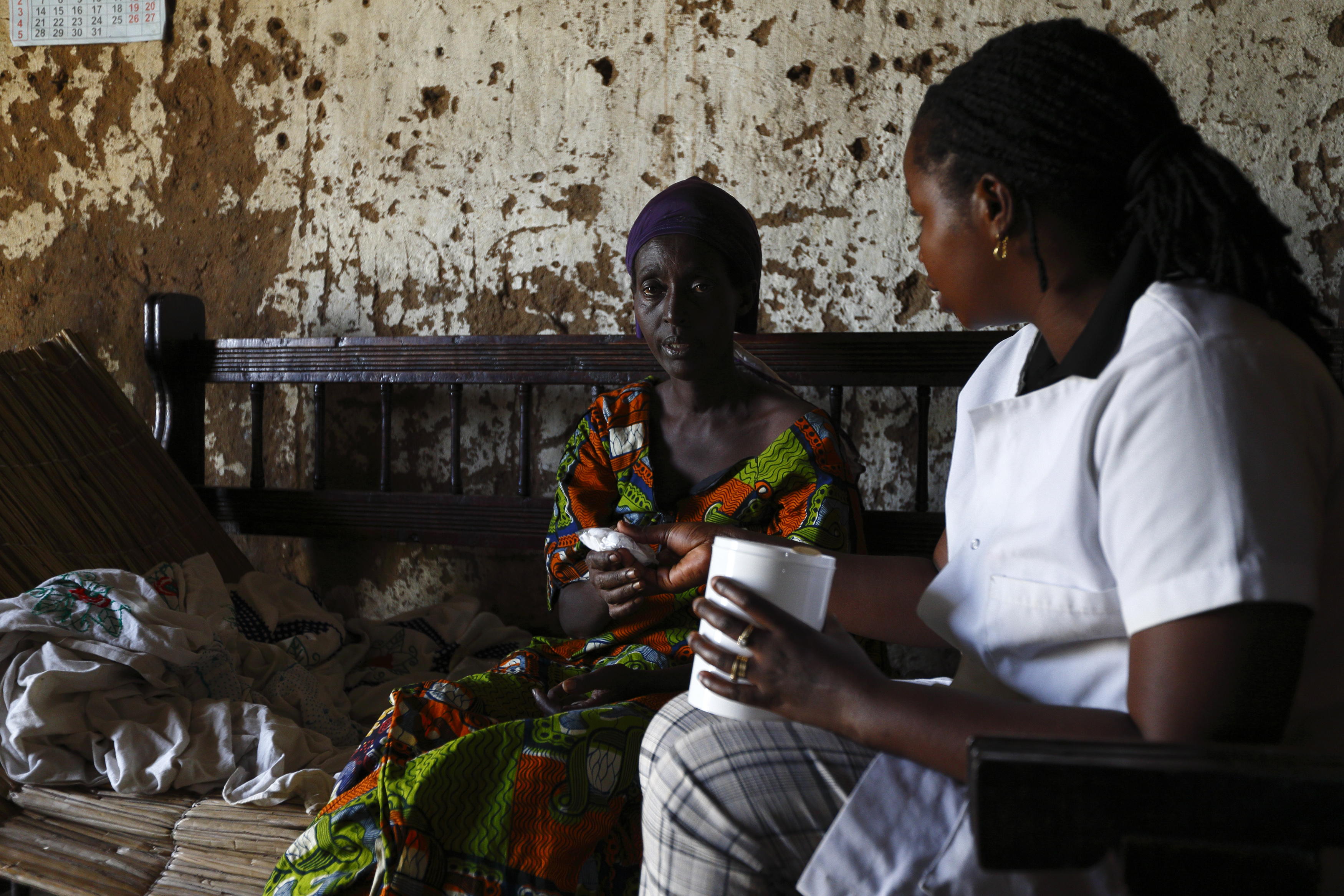
For the most part, individual countries fund their own labs — though a few may close without the support that filtered through GMRLN, Soni said. In other cases, without the test kits the network provides, some of these national labs will not do measles testing, O’Brien said, which means they won’t know where their immunization programs are failing.
“The issue with measles is it’s a fever and rash illness. And there are lots of different things that cause fever and rash,” she said. “And so unless you have a lab that’s going to confirm that this outbreak that you’re having is not dengue, it’s not something else, it’s measles, then you end up deploying measles vaccine resources and outbreak response resources to the wrong thing at the wrong time in the wrong place.”
Rota said that without GMRLN, the world would lose its sightlines on what is happening with measles and rubella, which can cause birth defects in babies born to mothers who are infected during pregnancy.
“I think some countries will lose their testing capacity,” he said. “From the point of view of the United States, you’re losing your early warning system of where measles and rubella outbreaks could be occurring.”
The threat to the network comes at a highly inopportune time. Measles vaccination efforts in multiple countries flagged during the early days of the Covid pandemic. A rise in anti-vaccine sentiment stemming from the pandemic has further eroded the percentage of children who are protected against the highly infectious virus.
While the two-dose measles vaccine regimen is highly effective — protecting about 98% of people who get both shots — the infectious nature of the virus means that when vaccination rates dip below 95%, outbreaks become more common and harder to control. In 2023, the most recent year for which there are global figures, measles cases were up 20% from the previous year, according to a WHO report published last November. There were 10.3 million cases reported globally, and 107,500 deaths.
This year in the United States, three people have died from measles — as many deaths in the first five months of 2025 as in the previous 24 years. As of late last week, the CDC reported that there have been 1,168 confirmed cases of measles, the second highest count in a single year since measles was declared eliminated in the U.S. in 2000.
Currently, measles cases that occur in this country are the result of infections contracted abroad or are part of a chain that started from an imported case. If transmission chains continue for a year, though, measles will be deemed to be endemic again in the U.S. and the elimination status will be lost.
link