
How is copper used in medical devices?

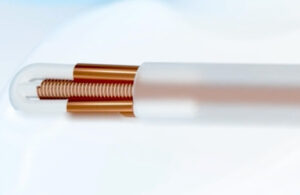
Copper is a key material in the Paragard IUD, shown here with its copper coils and T-arms sheathed by the device’s placement system. [Image courtesy of CooperSurgical]
Copper prices are soaring after President Donald Trump said he plans to levy a 50% tax on imports of the metal.
The copper tariffs, which would start Aug. 1, are reported to include semi-finished products.
Copper might not be the most exciting or cutting-edge medtech material, but this metal is used in a wide range of medical devices. And nearly half of the copper used in the U.S. is imported from abroad, primarily from Chile, followed by Canada and Peru.
Related: Intuitive’s trade war strategy holds lessons for other device developers
While a single medical device might only contain small amounts of copper, the additional cost of such a sizable import tax adds up for products manufactured at scale. And it’s just about impossible to come up with an exhaustive listing of medical devices that use copper because there are so many.

Zeiss Medical Technology developed the MTLawton disposable bipolar forceps with neurosurgeon Dr. Michael Lawton, who says the electrosurgical tool’s copper base alloy offers “superior thermal conduction [compared to aluminum] to improve cautery-based hemostasis and reduce tissue adhesion.” [Image courtesy of Zeiss Medical Technology]
Copper is found in devices such as insulin pumps and other drug delivery systems, implants like pacemakers and neurostimulators, imaging systems (MRI machines, CT scanners, ultrasound devices and X-ray machines), endoscopes, electrosurgical instruments, catheters, wearables, robotic systems, hearing aids and just about any other medical device with electronics, from simple digital thermometers to complex machines like proton beam therapy systems.
That’s because copper is a commonly used material for medtech cables, wires, connectors, circuit boards, batteries and electrodes, not to mention motors, tubing and sensors.
Copper is also used in tubes for distribution of medical gases and plasma storage cooling systems.
Copper will only be more important for medtech as medical device developers increasingly integrate electronics into their products for next-generation sensing, control and connectivity.
Copper has antimicrobial properties, which is why it’s and is toxic to humans at high levels, though treatments can improve biocompatibility. Copper is used in IUDs, for example, to kill sperm and prevent pregnancy.
It’s copper’s conductivity that make it so prevalent in medical devices, both for efficient transmission of electricity and heat.
Copper helps dissipate heat to keep devices and plasma cool, and is employed for systems that heat or cool patients during cardiac procedures where the heart is stopped. Copper helps shield sensitive electronics and sensors from electromagnetic and radiofrequency interference, and can be used as an additive to another critical medtech metal: nitinol.
Nitinol innovation: Download our free special report featuring nitinol expertise and tips from medical device OEMs
These are just a few uses of copper in medical devices, and there are more on the way.

This soft, stretchable wearable developed by researchers includes circuitry made of flexible, thin-film patterns of copper. [Image courtesy of Georgia Tech]
Researchers are looking into copper for other applications. Below are a few articles from our archives about research projects involving copper over the past decade or so:
link