


The ruling Democratic Party of Korea (DPK) has come forth to support oriental medicine practitioners as they push to institutionalize their use of X-rays.
The governing party urged the government to establish the system, stating that “X-ray use by traditional Korean medicine practitioners is legal.” The lawmakers also sided with the oriental medicine community on issues of integrated care and the primary care physician system, which have caused conflict with the medical community.

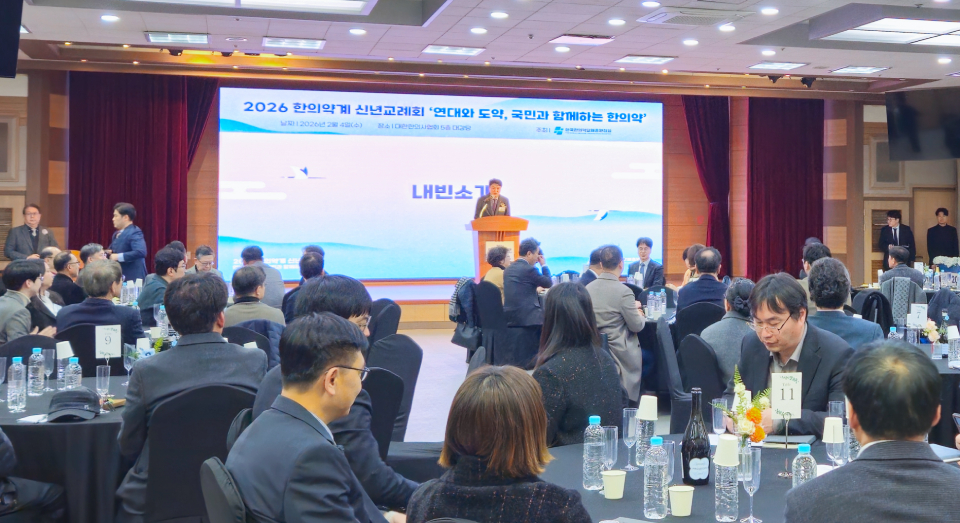
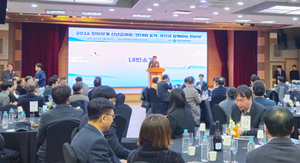
At the New Year’s gathering for the traditional Korean medicine community held at the Association of Korean Medicine (AKOM) headquarters in Gangseo-gu, Seoul, on Wednesday, many DPK lawmakers attended and pledged to resolve and support the oriental medicine community’s pending issues.
In her congratulatory speech, Rep. Lee Su-jin, the ruling party’s secretary for the National Assembly’s Health and Welfare Committee, defended the practice, saying, “The use of X-rays by traditional Korean medicine doctors is legal. Legally, the court ruled in favor of Oriental medicine doctors. This was not a conflict over professional roles or a turf war, but a court decision based on whether it ‘benefits the public and patients.’”
Rep. Lee was also involved in the formation of the Federation of Korean Medicine Associations, which hosted the New Year’s gathering.
Although the use of X-rays by oriental medicine practitioners has been legalized, in practice, public health centers are not permitting the installation of X-ray equipment (by oriental medicine practitioners), putting practitioners in a difficult position. There is a lack of policy support.”
Noting that the court based its ruling on the interests of “citizens and patients,” Lee said, “This year, it is crucial that all parties, including the Ministry of Health and Welfare, work together to resolve this issue. As the ruling party’s secretary at the Health and Welfare Committee, I will fulfill my responsibility in the National Assembly as well.”
Rep. Lee also stressed the role of oriental medicine practitioners in the “Integrated Care System,” set to be fully implemented this March. “The public perceives traditional Korean medicine treatment as warmer and more healing, viewing it positively,” she said. “I hope the traditional Korean medicine community continues to earn the public’s support.”
Rep. Seo Young-seok of the same party, who sponsored the Acupuncture Practitioner X-ray Permission Act, also pledged efforts to pass the bill this year. Seo proposed an amendment to the Medical Service Act last October to include acupuncture practitioners among those designated as safety management officers for diagnostic radiation-emitting devices.
“Traditional Korean medicine is a core pillar of ‘K-healthcare.’ Regrettably, we are not properly utilizing this valuable asset,” Rep. Seo said. “If (oriental medicine practitioners) can appropriately utilize developing medical technologies and effectively integrate them with traditional medicine, I believe this will lay the foundation for (Korean medicine) to contribute to a better future and public health.”
Rep. Kim Yoon, a physician by training, also pledged to address issues facing the traditional Korean medicine sector actively.
“I believe Korean medicine and its practitioners have long been denied recognition for their expertise and fair treatment,” Rep. Kim said. “In reality, issues like oriental medicine practitioners’ use of X-rays, at-home medical centers, and primary care physician problems have been overshadowed by other priorities and not thoroughly addressed by the Health and Welfare Committee.”
Rep. Kim continued, “Once regional and essential healthcare issues are somewhat resolved, I believe the Health and Welfare Committee will more actively address traditional Korean medicine-related policy issues. It’s not that the committee considers traditional medicine issues unimportant.”
He expressed hope that “this year will be the first year we tackle the postponed tasks.”
In response, government officials emphasized the scientific advancement and global industrialization of traditional Korean medicine.
In her congratulatory address that day, Minister of Health and Welfare Jeong Eun-kyeong stated, “Traditional Korean medicine must prepare for a new leap forward by adding science and innovation to its traditional values. We must accelerate its scientific advancement through strengthening clinical evidence, standardization, and data-based research, and enhance global competitiveness with an industrialization strategy linking Korean medicine and digital healthcare.”
To this end, the government pledged to expand R&D investment and enhance quality control and safety systems to establish a sustainable foundation for the growth of traditional medicine. Minister Jeong also said that the ministry would “expand the role of traditional medicine” in primary care and the caregiving sector.
Bang Seok-bae, the Korean Medicine Policy Officer at the ministry, read Minister Jeong’s address.
The President’s doctor calls for ‘eliminating discrimination in medical devices and the primary care physician system’

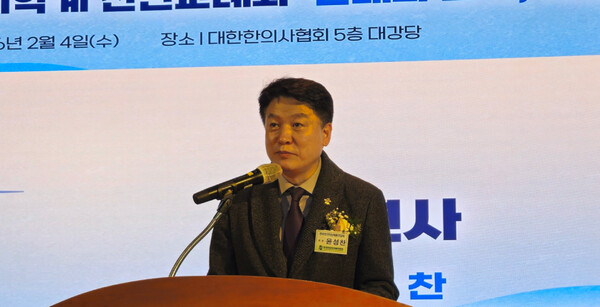
Encouraged by the ruling party’s support, the traditional medicine community also pledged to strengthen global competitiveness and eliminate policy discrimination.
“The global traditional medicine market exceeds 1,000 trillion won ($681 billion). Based on the outstanding capabilities of the traditional Korean medicine community, we must preempt this massive global market,” said Yoon Sung-chan, chairman of the Federation of Korean Medicine. “The Korean medicine community will work in conjunction with national strategies to ensure Korean medicine is utilized as a core asset of the ‘K-Initiative.’”
Yoon added, “Despite the government’s policy to strengthen primary care, the reality is that only the (Western) doctor-oriented primary care physician system is being implemented. This must be rectified. We will establish a primary care physician system led by traditional medicine practitioners.” Chairman Yoon is President Lee Jae Myung’s “primary care physician for traditional Korean medicine.”
He further pledged, “Even though the judiciary branch has recognized Korean medicine practitioners’ right to use X-rays, the unreasonable regulation preventing them from doing so must be improved to develop the Korean medicine medical device market and industry. We will dismantle unreasonable Korean medicine systems and industrial regulations one by one.”
link